
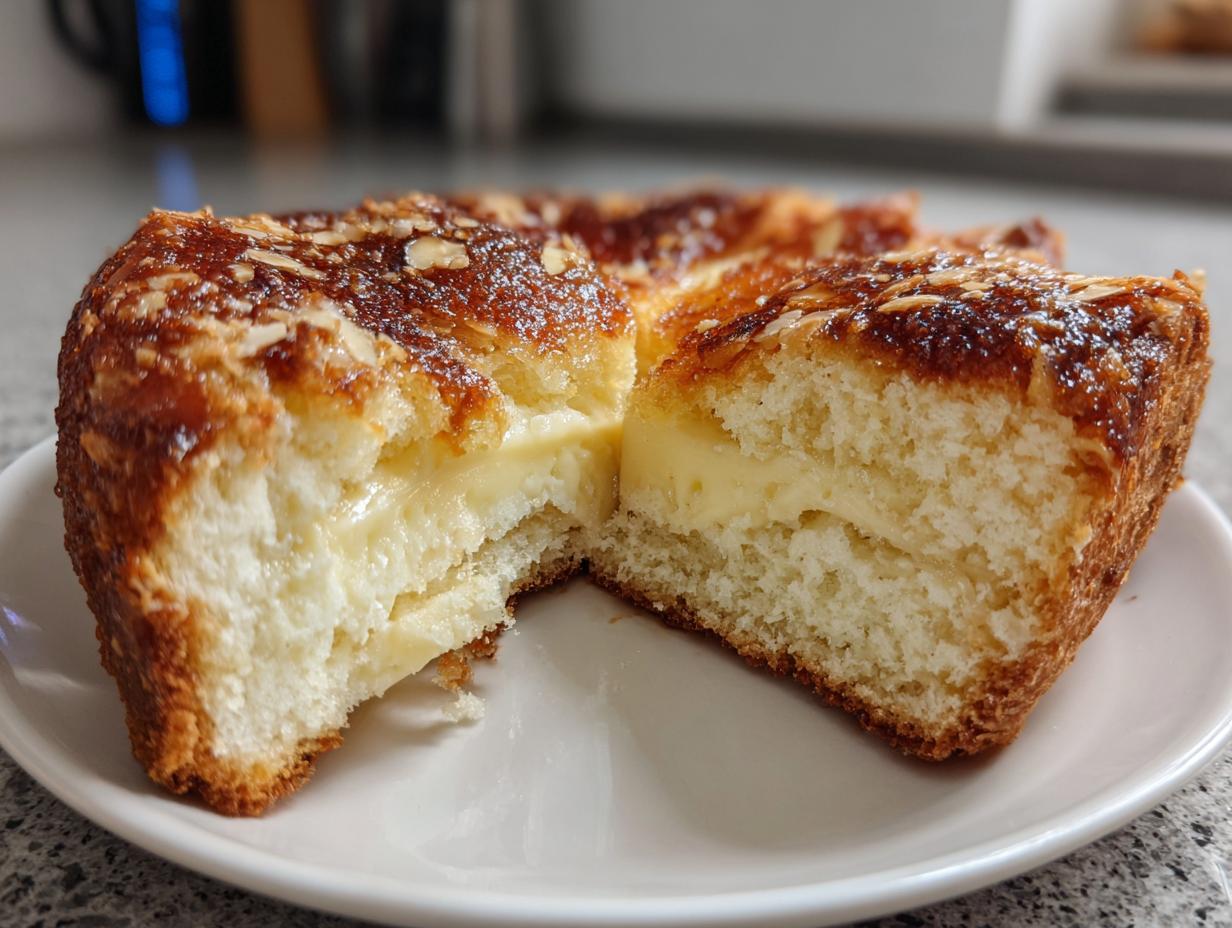
When we talk about showstoppers, we aren’t just talking about towering, complicated wedding cakes. We’re talking about the desserts that instantly transport you somewhere special, like a cozy café in Bavaria. That’s exactly what the Authentic German Bee Sting Cake, or Bienenstich, does. I’m Juliana, and after years developing recipes professionally, I wanted to conquer European classics so you don’t have to be intimidated by the yeast dough. My background in food science helps me break down these more technical methods, ensuring your homemade bee sting cake comes out perfectly layered and utterly reliable every single time. Trust me, this Honey Almond Dessert is worth every minute!
- Why This Authentic Bee Sting Cake (Bienenstich) Recipe Works
- Gathering Ingredients for Your Bee Sting Cake
- Step-by-Step Instructions for the Bee Sting Cake
- Ingredient Notes and Substitutions for Your Bee Sting Cake
- Tips for a Showstopper Bee Sting Cake
- Serving Suggestions for This German Cake Recipe
- Storage and Reheating Instructions for Bee Sting Cake
- Frequently Asked Questions About Bee Sting Cake
- Share Your Bee Sting Cake Success
Why This Authentic Bee Sting Cake (Bienenstich) Recipe Works
I know what you’re thinking: yeast dough? Custard? This sounds like a nightmare to tackle on a Tuesday night. But that’s exactly why I developed this specific version of the Bienenstich Cake. My goal is to turn that intimidation factor into pure confidence, helping you create a genuine Bakery Style Cake at Home.
This recipe is structured around perfect texture, which is the challenge everyone faces. Here’s how we nail it:
- This process guarantees you get that quintessential Showstopper Cake Recipe look and taste without the fuss of a professional bakery.
- We use precise timings for the yeast rise so you don’t end up with a dense frisbee instead of a fluffy base.
- The components—base, filling, and crunch—are proportioned exactly right so you get a perfect bite every time.
If you are ready to conquer European classics, check out my deeper dive on achieving reliable results in German baking here: Authentic Bee Sting Cake Guide.
Mastering the Yeast Cake Baking Process
Honestly, the yeast dough part is the most rewarding! Don’t let it scare you. My professional testing ensures the steps for activating that yeast are foolproof—lukewarm milk, gentle kneading, and a draft-free spot to rest. When the dough doubles up happy and pillowy, you’ve already won half the battle. That soft, fluffy base is the foundation; if it’s right, the whole Bee Sting Cake sings.
The Perfect Layer Balance: Custard and Topping
The magic of this dessert lives in the contrast. We need that tender base to hold up the filling, and that filling needs to contrast sharply with the topping. Getting the right thickness in that vanilla custard is crucial so it doesn’t squish out everywhere when you slice it. It’s all about engineering a perfect Layer Cake with Custard structure where the sweet cream meets the crunchy, caramelized honey.
Gathering Ingredients for Your Bee Sting Cake
Okay, now for the fun part: gathering our supplies! Because this bee sting cake is made of three distinct layers, I keep the ingredients separated on the counter. This way, when we start mixing, we don’t accidentally grab the wrong sugar or leave out the yeast. Professional recipe development taught me that organization is 90% of the battle when you are whipping up a Traditional German Dessert like this!
If you are looking for a super streamlined list, I have a quick-prep guide linked here that gets right to the point: Easy Bienenstich Guide.
For the Yeast Dough Base
We need that soft, slightly chewy base that only yeast can provide. Make absolutely sure your milk is lukewarm—not hot—when you wake up the yeast. That temperature control is everything for your initial rise!
- 1 cup whole milk
- 1/4 cup granulated sugar
- 2 1/4 teaspoons active dry yeast
- 3 cups all-purpose flour
- 1/2 teaspoon salt
- 1 large egg
- 1/4 cup unsalted butter, softened (softened is key for kneading!)
For the Caramelized Almond Topping
This sticky, crunchy layer is what gives the bee sting cake its name! The combination of brown sugar and honey makes this Caramelized Almond Topping addictive. Don’t skimp on the good honey here—it really shines through!
- 1/2 cup unsalted butter
- 1/2 cup packed light brown sugar
- 1/4 cup honey
- 1/4 cup heavy cream
- 1 cup sliced almonds
For the Fluffy Vanilla Cream Cake Filling
This is our rich, luscious center—the Fluffy Vanilla Cream Cake element that makes it so decadent. We use egg yolks and cornstarch here to ensure the custard sets up firm enough to hold its shape, which is super important for a neat slice.
- 1 1/2 cups whole milk
- 1/2 cup granulated sugar
- 1/4 cup cornstarch (our secret thickener!)
- 1/4 teaspoon salt
- 2 large egg yolks
- 1 teaspoon vanilla extract
- 1/2 cup cold heavy whipping cream
Step-by-Step Instructions for the Bee Sting Cake
Alright, this is where the real magic happens! Making an Authentic German Bee Sting Cake is satisfying because you’re building something incredible layer by layer. We’re going to tackle this in three clear phases: getting that base dough happy, making that sticky topping, and then putting it all together. If you follow these steps exactly, especially those temperatures, you’ll have a slice that looks like it came straight from a German bakery. We’re aiming for reliable, repeatable results here!
If you want a visual walkthrough of these stages, check out this amazing guide for inspiration: Authentic Bee Sting Cake.
Creating and Proofing the Yeast Cake Dough
This is the Yeast Cake Baking part that always gets people nervous, but don’t worry! We need happy yeast. First task: warm that milk just until it’s lukewarm—think slightly warmer than body temperature, around 110°F. Dissolve the yeast and a tiny bit of sugar in it. If it gets foamy after five minutes, your yeast is alive and ready to work! That’s a huge win!
Mix your dry stuff, add the yeast mixture and the egg, and then the softened butter goes in last. Now, knead it! You need about eight to ten minutes by hand or mixer until it’s springy. Pop that dough in an oiled bowl, cover it, and find the warmest, draft-free spot in your kitchen. We need that dough to double—give it a good hour to an hour and a half. Patience here pays off immensely for that soft base layer.
Preparing the Honey Almond Topping
While that dough is puffing up nicely, we make the famous topping. In a small saucepan, melt the butter, brown sugar, honey, and heavy cream together. This takes constant stirring! You want this mixture to just barely bubble—the minute it starts boiling, pull it straight off the heat. If you cook it too long, the caramel will get hard and shatter instead of giving you that sticky crunch. Stir in your sliced almonds and set this gorgeous mixture aside.
Baking and Cooling the Bee Sting Cake Layer
Preheat your oven to 350°F. Gently punch down the risen dough and press it right into your greased 9-inch springform pan. Spread that incredible almond topping evenly over the surface—try to get the almonds distributed nicely. Bake this for about 30 to 35 minutes. It should look deeply golden brown. Here is my biggest piece of advice: let this layer cool completely on a wire rack. Completely! If you try to slice it while warm, the bottom layer will tear apart, and we can’t fill a shredded cake.
Making and Chilling the Custard Filling
Now for the rich center! Whisk your milk, sugar, cornstarch, and salt in a saucepan over medium heat. Whisk constantly until it thickens up like a very heavy pudding. This happens fast when the cornstarch gets going, so don’t walk away!
Expert Tip Alert: We temper those egg yolks! Slowly whisk about half a cup of the hot milk mixture into your yolks first, off the heat. This warms them up gently so they don’t scramble when they hit the main pot. Pour the yolk mixture back in and cook for just one more minute. Stir in your vanilla. Press plastic wrap directly onto the surface—I mean *touching* it—to stop a skin from forming. Chill this completely—two hours minimum. Warm custard and whipped cream do not mix!
Once chilled, whip your cold heavy cream until stiff. Gently fold the whipped cream into the set custard until it’s just combined. You now have the fluffiest filling imaginable! Don’t overmix, or you’ll deflate all that lovely air.
Assembling Your Finished Bee Sting Cake
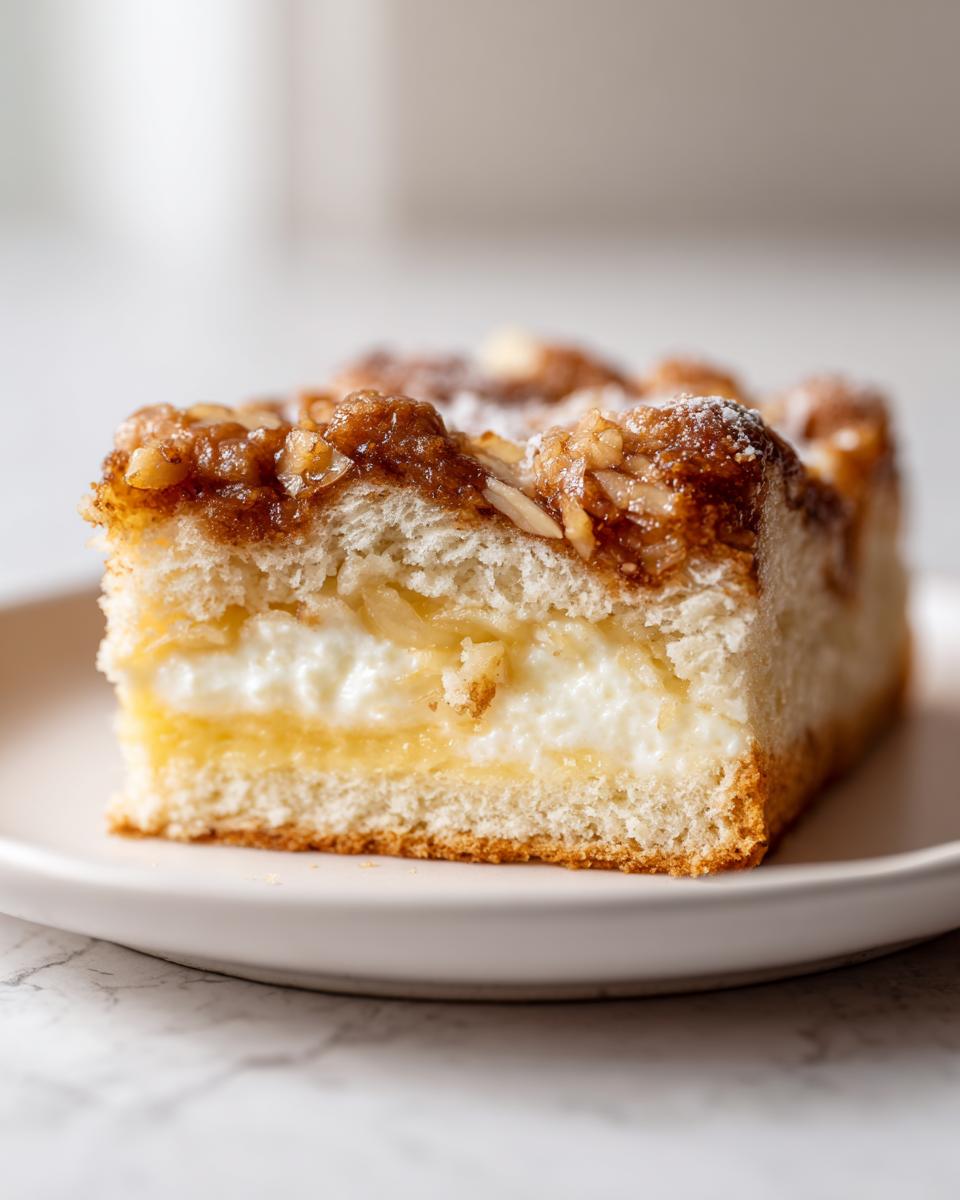
Once that cake base layer is stone cold, slice it right down the middle horizontally to get two layers. I love using a long serrated bread knife for the cleanest cut. Spread all that lovely, Fluffy Vanilla Cream Cake filling gently over the bottom piece, then carefully place the crust-side-up top layer onto the filling. Now, the final step before serving: this custard filled cake needs to chill again for at least an hour. That hour lets the filling firm up a bit so you get those clean slices when you serve this amazing Bee Sting Cake to your friends.
Ingredient Notes and Substitutions for Your Bee Sting Cake
You know I love talking science, and the science behind our bee sting cake really comes down to ingredient quality! If you’re aiming for that true, bakery-quality texture, you have to be mindful of what you swap out. Since this is a genuine Honey Almond Dessert, the honey you use makes a big difference in the overall flavor profile. Use something flavorful—your favorite local wildflower honey is usually perfect!
I’ve pulled together some notes on the ingredients that trip people up the most, so you can swap things out confidently without ruining that beautiful caramelized almond topping or the fluffy cream center. When you’re aiming for a Classic European Pastry, precision matters, but flexibility matters too!
If you need a quick recipe idea that focuses solely on that crunchy topping, check out this sweet link: Honey Almond Cake Recipe.
Yeast Dough Adjustments
The dough is the heart of this Bienenstich Cake, so treat the milk gently! If you don’t have whole milk on hand, 2% milk works totally fine. It just won’t be quite as rich, but it won’t derail the recipe, so don’t panic if you only have that in the fridge!
Now, yeast choice: I called for active dry yeast because it’s reliable, but if you only have instant yeast, you can absolutely use it. The difference is that instant yeast doesn’t need that five-minute proofing in the milk first. You can just mix it right into your dry flour mixture! However, because instant yeast is more aggressive, I usually tell people to cut that first rise time by about 15 minutes. Keep an eye on it!
Custard Cream Variations
The vanilla custard filling is what really makes this cake feel luxurious. If you are nervous about making a proper custard using cornstarch and yolks—which, yes, requires careful tempering—you have options! You can often find good quality pastry cream powder at specialty stores. If you use that, just follow the package directions exactly instead of my Step 8 instructions.
If you want something even lighter and quicker than a full custard, you can substitute the chilled custard with stabilized whipped cream. You’d whip your 1/2 cup heavy cream, but you would add about 1 teaspoon of powdered gelatin dissolved in a tablespoon of cold water (let bloom for 5 minutes, microwave for 5 seconds to dissolve) directly into the whipped cream right before the stiff peaks form. That gives you a Custard Filled Cake texture that holds up well without the stove-top custard.
Tips for a Showstopper Bee Sting Cake
We aren’t just making a dessert here; we’re building a masterpiece! If you want your bee sting cake to be truly worthy of being called a showstopper—the kind that makes your guests gasp—you have to pay attention to the little details concerning texture and presentation. These tips are what I picked up when I was developing professional recipes; they elevate this from a homemade bake to something you’d be proud to see in a bakery window. Follow these, and you’ll nail that perfect balance that makes this Impress Guests Dessert truly memorable!
For more guidance on nailing the assembly for that perfect look and texture, check out this helpful resource: German Bee Sting Cake.
Preventing a Soggy Almond Topping on Your Bee Sting Cake
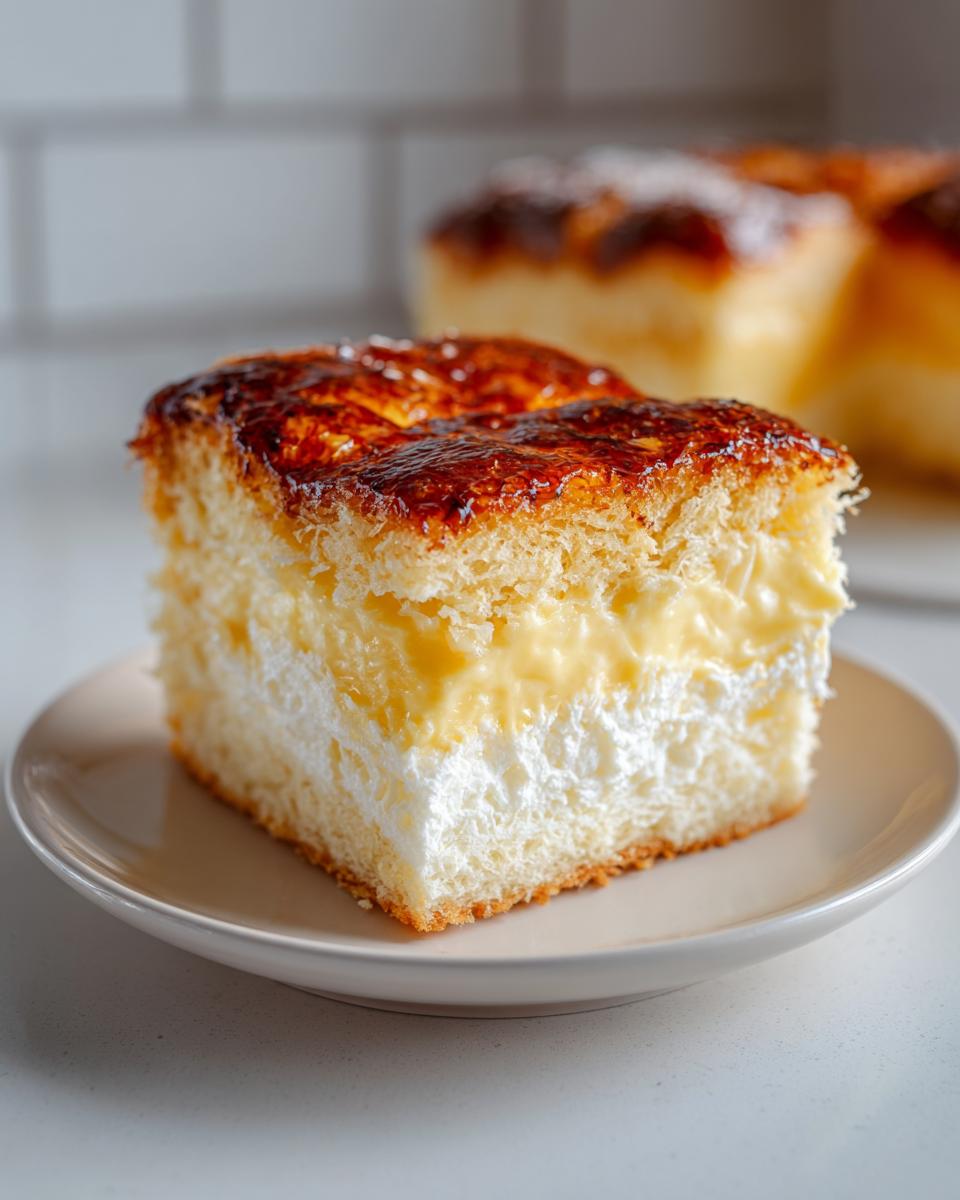
This is where things can go sideways fast! The gorgeous, crunchy honey almond topping needs a barrier between it and that luscious filling. The number one rule here is simple: the cake base must be completely cool before you spread the custard on. If the cake is even slightly warm, the cold filling will start melting the structure, and the whole thing gets mushy fast.
Also, when you’re spreading that vanilla custard, keep it slightly away from the very edges! If you push it right to the rim, when you place the top crust layer on, the pressure will squeeze the cream right out the sides, ruining your clean lines and making a mess. Give the filling about a quarter-inch border of bare cake so that when you press the top on, the filling stays neatly contained inside.
Achieving Clean Slices
Nobody wants slicing the final, beautiful Bienenstich Cake to turn into a demolition zone! Because we have that soft yeast base and that rich, creamy filling, a standard room-temperature knife just tears things up. Here’s my secret from the test kitchen:
Get your sharpest, thinnest knife—a chef’s knife or slicing knife works best. Now, dip that knife into a tall glass of very hot water for about twenty seconds. Wipe the blade completely dry with a clean towel, and then make your first cut. That heat slices right through the cream and the crust beautifully without smearing. For every single subsequent cut, you *must* repeat this process: hot water, wipe dry, slice. The small effort makes the presentation stunning!
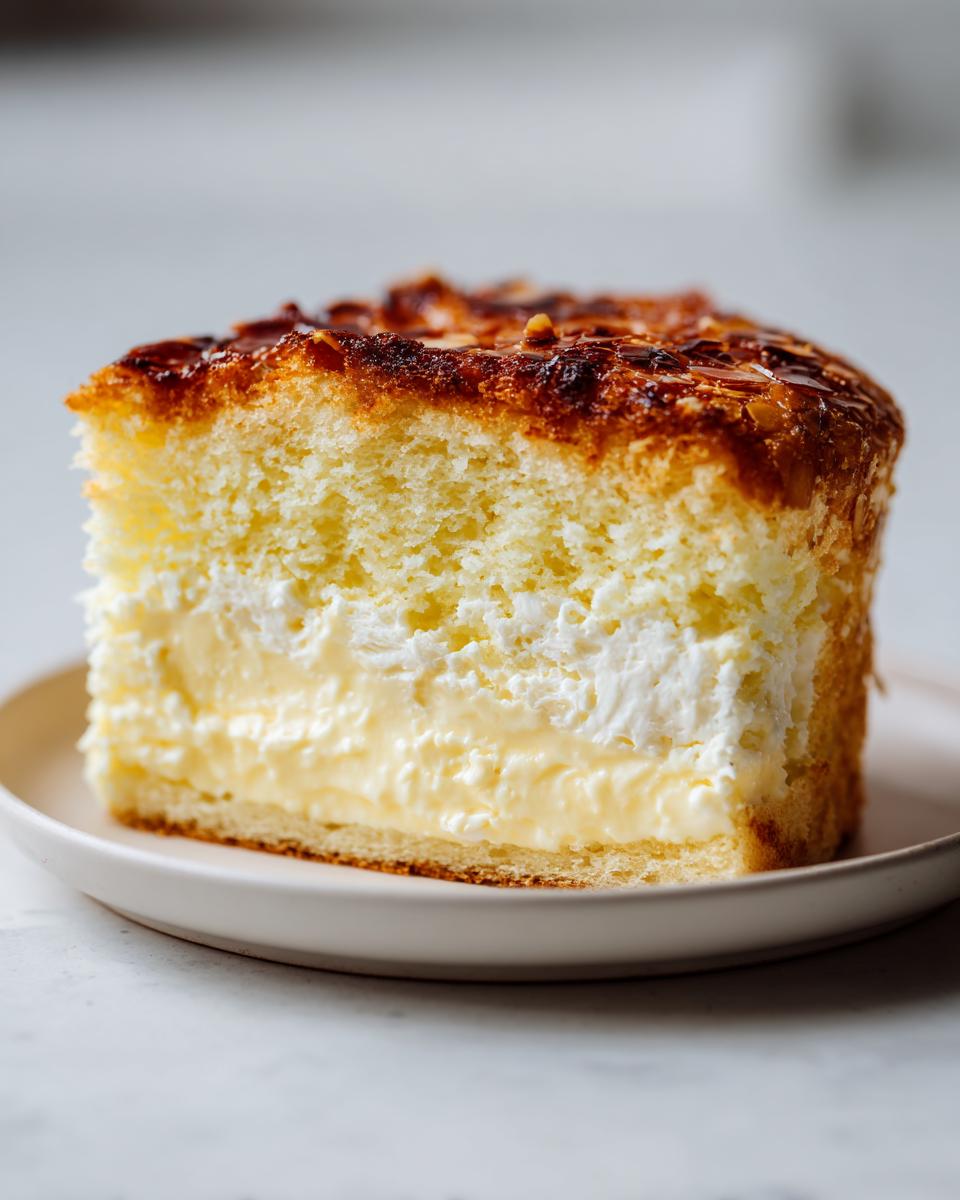
Serving Suggestions for This German Cake Recipe
Okay, you’ve successfully navigated the yeast dough, you’ve handled the custard, and you’ve got this incredible, crunchy bee sting cake sitting on your counter. Now, how do you serve this masterpiece? Pairing is almost as important as the bake itself! Since this cake is rich—it’s got butter, cream, almonds, and honey—you want something to cut through that sweetness, like a crisp, hot drink.
This is the ultimate Traditional German Dessert for a cozy afternoon. I always think of this as the perfect centerpiece for a slower, relaxing time, making it a fantastic Weekend Baking Project candidate. You put in the work, now enjoy the reward!
For true traditional flair, you absolutely have to serve a slice of this Bienenstich Cake alongside a strong, dark roast coffee. The bitterness of the coffee is the perfect counterpoint to the sweet honey and rich vanilla cream. Honestly, any strong black coffee helps balance the entire palate.
If coffee isn’t your thing, a classic, slightly smoky black tea works beautifully too—think English Breakfast or an Earl Grey. You want a beverage that’s robust enough not to get completely lost beneath the almond crunch and the custard.
When serving, remember my slicing tip from earlier! A clean slice on a pretty white plate is your goal. I usually don’t bother with extra garnishes; the natural crust of the bee sting cake is decoration enough. Let that honey, almond shine! Just plate it, pour your coffee, and enjoy the quiet triumph of baking something this special.
Storage and Reheating Instructions for Bee Sting Cake
Listen, if you’re making a beautiful, multi-layered bee sting cake with real dairy custard, the storage situation needs our full attention. We want the base to stay soft, the almonds to stay crunchy, and the cream to stay safe! Since we loaded this cake up with that luscious vanilla custard, this is not a cake you can leave sitting out on the counter for days, no matter how much you want to.
Because the filling is critical, we need to treat this like a gourmet European pastry and keep it cool. Covering the entire cake loosely with plastic wrap or placing it under a cake dome in the fridge is the best way to protect it from absorbing any weird fridge smells. Don’t wrap it airtight, though—we don’t want condensation to soften that gorgeous, crunchy almond topping!
When it comes to how long it lasts, the general rule for any custard filled cake is three to four days maximum in the refrigerator. The yeast dough base starts to get a little sad after day four. If you’re lucky enough to have leftovers past day three, the filling will still be fine, but the texture might change slightly.
If you need to store it longer than that, you absolutely should slice the Bienenstich Cake first, wrap the individual slices tightly in plastic wrap, and pop them in the freezer. They freeze surprisingly well! You can keep them frozen for up to a month. When you want to eat one, just pull it out and let it thaw slowly in the fridge overnight. Seriously, a slice of my German layer cake tastes almost freshly made the next morning!
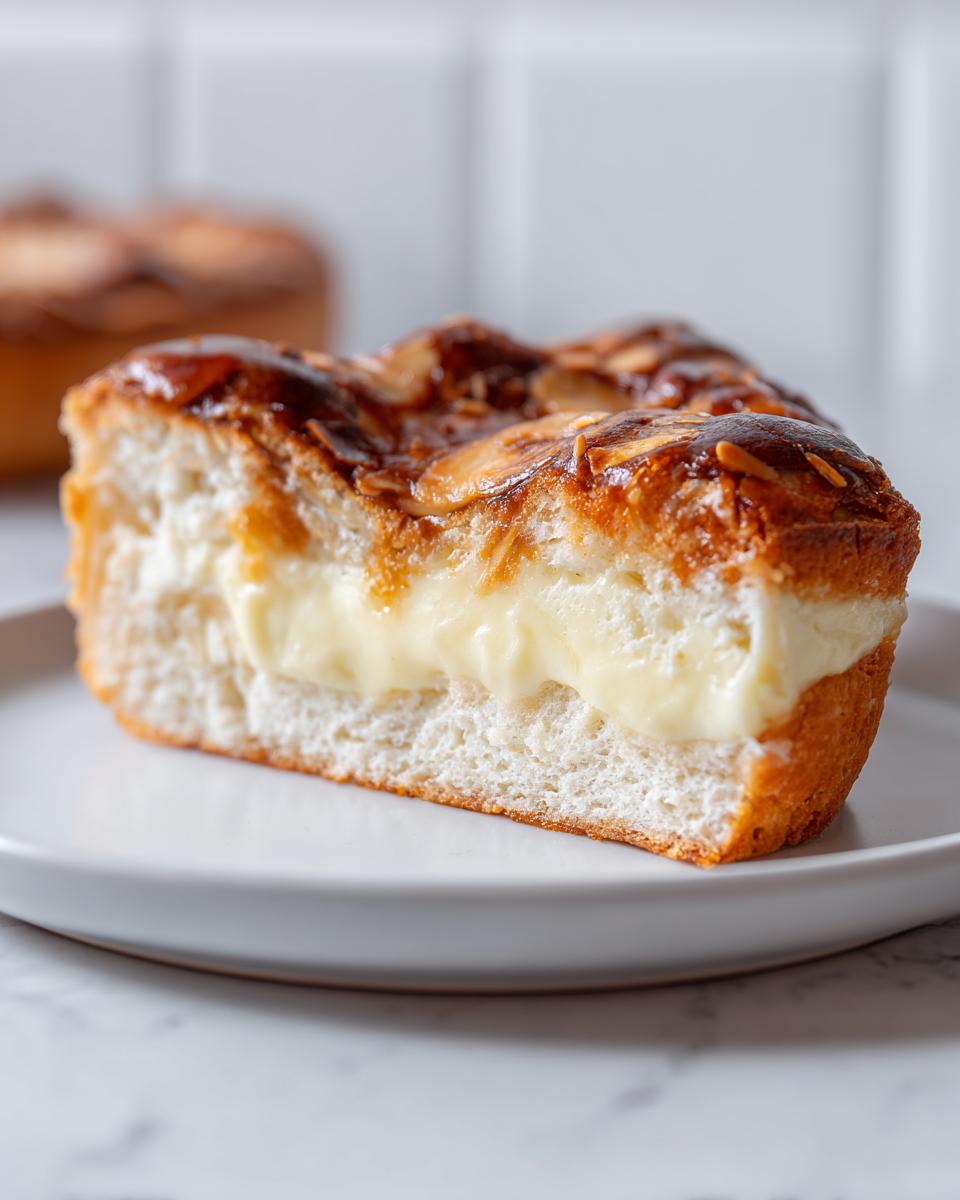
And reheating? Nope, don’t even think about it! This cake is meant to be enjoyed cold or perfectly chilled. Heating it up will melt that beautiful vanilla cream filling into a soupy mess and turn your crunchy topping into sticky goo. Keep it cool, keep it covered, and enjoy those crisp layers!
Frequently Asked Questions About Bee Sting Cake
When you are diving into a classic like this, you are bound to have some questions! I totally get it. Baking requires science, and sometimes the traditional names can be confusing. I put together the questions I get asked most often when teaching people how to make this incredible Traditional German Dessert so you feel totally confident before you even turn on your oven.
If you want to explore more about the history of European pastries, I highly recommend looking around this excellent resource: Authentic Bee Sting Cake.
What does ‘Bienenstich’ mean, and why is it called bee sting cake?
It’s such a fun name, right? In German, Bienenstich literally translates to “bee sting.” There are a couple of fun stories behind it! The most charming story is that the baker who supposedly invented it—way back in the 19th century—threw a piece of cake at a bee, stinging it, and that’s how they knew the cake was done! Cute, huh?
The more likely reason, and the one I prefer, relates to the topping. That lovely Caramelized Almond Topping is cooked with honey, which was historically a sweetener used to stop bees from stinging your hives. So, the name refers to the ingredients or the sweet reward of retrieving honey, rather than an actual sting!
Can I skip the yeast and use a sponge cake base for this bee sting cake?
You totally *can* use a sponge cake or even a simple butter cake, but here is the honest truth: it won’t be the same classic Bee Sting Cake. The texture you get from the yeast dough is unique. It results in something lighter and slightly chewy that supports the rich filling without weighing it down. That delicate contrast is the hallmark of proper Yeast Cake Baking.
If you use a standard, chemically leavened cake, it tends to be denser, and you lose that specific light quality that makes the final Bienenstich Cake structure so impressive. I really encourage you to trust the yeast; I’ve made the process as simple as possible, I promise!
How far ahead can I assemble the custard filled cake?
This is a critical texture question! Because we are dealing with delicate layers—soft yeast dough, creamy custard, and a crunchy topping—timing your assembly is key to getting that “bakery quality” result. My rule is: assemble the cake the same day you plan to serve it, or at most, the night before.
If you assemble too far ahead, even though the custard is stable, the moisture from the cream will slowly start to travel into the crust, and you lose that glorious crunch! If you must assemble the night before, chilling it overnight is fine, but that crunch factor will be dialed down from a 10 to about an 8. For the absolute best result, bake the cake layer one day, make the custard and let it chill separately, and then combine everything the next morning for serving that afternoon. That gives you the best structure for slicing that gorgeous custard filled cake!
Share Your Bee Sting Cake Success
Whew! We did it! You’ve tackled the yeast dough, you’ve mastered the tempering for the custard, and you have achieved that spectacular, crispy, golden topping. This bee sting cake is truly a labor of love, and now that you’ve poured your effort into this incredible German Cake Recipe, I want to see it!
Sharing your culinary triumphs is the best part of cooking, honestly. Did you manage to get those razor-sharp slices I talked about? Did your family rave when they heard you made Bienenstich totally from scratch? I live for those stories!
Please, if you made this recipe, take a moment below to tell me how it went! A quick rating lets other home bakers know they can trust this recipe just as much as you do. And if you snapped a photo—especially one showing off that perfect almond crust against the creamy interior of your custard filled cake—drop it in the comments or tag me on social media! I love seeing my recipes find new homes!
If you’re looking for another amazing traditional German bake after mastering this one, take a peek at Conan’s great guide for more inspiration: Traditional German Baking. Happy baking, friends, and thank you for trusting the science!
PrintAuthentic German Bee Sting Cake (Bienenstich) with Yeast Dough and Vanilla Custard Filling
Make the classic German Bee Sting Cake, or Bienenstich, at home. This recipe guides you through creating a soft yeast cake base, a rich vanilla custard filling, and the signature crunchy, caramelized honey-almond topping for a bakery-style dessert.
- Prep Time: 45 min
- Cook Time: 35 min
- Total Time: 185 min
- Yield: 10 servings
- Category: Dessert
- Method: Baking
- Cuisine: German
- Diet: Vegetarian
Ingredients
- For the Yeast Dough: 1 cup whole milk, 1/4 cup granulated sugar, 2 1/4 teaspoons active dry yeast, 3 cups all-purpose flour, 1/2 teaspoon salt, 1 large egg, 1/4 cup unsalted butter (softened)
- For the Honey-Almond Topping: 1/2 cup unsalted butter, 1/2 cup packed light brown sugar, 1/4 cup honey, 1/4 cup heavy cream, 1 cup sliced almonds
- For the Vanilla Custard Filling: 1 1/2 cups whole milk, 1/2 cup granulated sugar, 1/4 cup cornstarch, 1/4 teaspoon salt, 2 large egg yolks, 1 teaspoon vanilla extract, 1/2 cup cold heavy whipping cream
Instructions
- Prepare the Yeast Dough: Warm the milk until lukewarm (about 105-115°F). In a small bowl, dissolve the yeast and 1 teaspoon of the sugar in the warm milk. Let stand for 5 minutes until foamy.
- In a large bowl, whisk together the flour and salt. Add the yeast mixture, remaining sugar, and the egg. Mix until a shaggy dough forms.
- Add the softened butter. Knead the dough by hand or with a stand mixer for 8-10 minutes until it is smooth and elastic.
- Place the dough in a lightly oiled bowl, cover, and let it rise in a warm place for 1 to 1.5 hours, or until doubled in size.
- Prepare the Topping: While the dough rises, combine the butter, brown sugar, honey, and heavy cream in a small saucepan. Heat over medium heat, stirring constantly, until the butter is melted and the mixture just begins to bubble. Remove from heat and stir in the sliced almonds. Set aside.
- Preheat your oven to 350°F (175°C). Punch down the risen dough and press it evenly into a greased 9-inch springform pan.
- Spread the honey-almond topping evenly over the dough surface.
- Bake for 30-35 minutes, or until the cake is golden brown and the topping is caramelized. Let the cake cool completely on a wire rack.
- Prepare the Custard Filling: In a medium saucepan, whisk together the milk, sugar, cornstarch, and salt. Heat over medium heat, whisking constantly, until the mixture thickens significantly, about 5-8 minutes.
- In a separate small bowl, whisk the egg yolks. Temper the yolks by slowly whisking about 1/2 cup of the hot milk mixture into the yolks. Then, pour the tempered yolk mixture back into the saucepan. Cook for 1 minute more, whisking constantly, until very thick. Remove from heat and stir in the vanilla extract.
- Press plastic wrap directly onto the surface of the custard to prevent a skin from forming. Chill completely in the refrigerator (at least 2 hours).
- Finish the Filling: Once the custard is cold, whip the cold heavy cream until stiff peaks form. Gently fold the whipped cream into the chilled custard until just combined.
- Assemble the Cake: Once the cake is completely cool, slice the cake horizontally into two even layers. Spread the vanilla custard filling evenly over the bottom layer. Place the top layer (the almond crust side) back on top.
- Chill the assembled Bee Sting Cake for at least 1 hour before slicing and serving.
Notes
- For the best yeast dough rise, ensure your milk temperature is correct and place the dough in a draft-free, warm spot.
- Do not overbake the cake layer; it should remain soft to contrast the crunchy topping.
- When slicing the cooled cake, use a sharp, thin knife and wipe the blade clean between cuts for neat servings.
Nutrition
- Serving Size: 1 slice
- Calories: 450
- Sugar: 35g
- Sodium: 210mg
- Fat: 25g
- Saturated Fat: 14g
- Unsaturated Fat: 11g
- Trans Fat: 0.5g
- Carbohydrates: 50g
- Fiber: 2g
- Protein: 7g
- Cholesterol: 120mg